
It’s 7:15 on a freezing July morning in Hoppers Crossing. You’re already running late for work. You jump in the car, turn the key — and instead of the engine firing to life, you get a sad click-click-click. Or worse: nothing at all.
Every winter, no-start calls are the single most common reason drivers across Wyndham end up stranded in their own driveways. And almost every time, one of three components is to blame: the battery, the starter motor, or the alternator.
The good news? Each one fails in its own distinct way. If you know what to listen and look for, you can narrow down the culprit in a couple of minutes — before you call for a tow you might not need. Here’s how to tell the difference, straight from the workshop floor at MO3GMechanics.
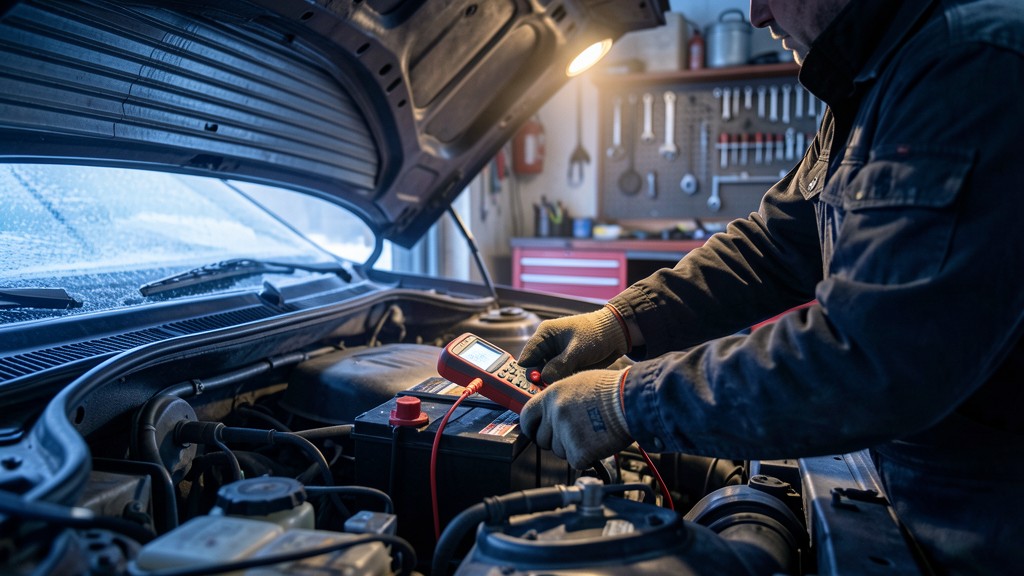
First, Meet the Three Culprits
Your car’s starting and charging system is a three-part team. When one player drops the ball, the whole system falls over — but how it falls over tells you who’s responsible.
The battery is your stored energy. It holds the charge needed to crank the engine and powers everything electrical when the engine is off. Think of it as the water tank.
The starter motor is the muscle. When you turn the key (or press the button), it takes the battery’s energy and physically spins the engine fast enough for it to fire and run on its own. It’s a small but brutally powerful electric motor, and it works harder than almost any other component on your car.
The alternator is the generator. Once the engine is running, the alternator takes over — powering your lights, heater, demister and radio, while constantly recharging the battery for the next start. If the battery is the water tank, the alternator is the rain that refills it.
Now here’s the key insight: a dead battery, a dead starter and a dead alternator all feel like “the car won’t start” — but they leave completely different clues.
If It’s the Battery: Slow, Weak and Clicking
The battery is the culprit in the majority of winter no-starts we see — roughly seven out of ten. Here’s the classic signature:
• Slow, laboured cranking. The engine turns over sluggishly, like it’s waking up on a Monday morning. Rrrr… rrrr… rrrr. That’s a battery with just enough charge to try, but not enough to finish the job.
• Rapid clicking. That click-click-click-click when you turn the key is the starter solenoid firing — but the battery doesn’t have the grunt to keep the starter motor spinning. It’s the single most recognisable sound of a flat battery.
• Dim dash lights and headlights. Turn the key to “on” before starting. If the dash lights look weak, or the headlights are noticeably dull, the battery is struggling.
• It started fine yesterday… sort of. Batteries rarely die without warning. If cranking has been getting lazier over the past week or two, your battery has been waving a white flag — you just couldn’t see it.
Batteries in Victoria typically last three to five years. Cold weather doesn’t kill them directly — it exposes the weakness that’s been building for months. As we covered in our earlier post on why car batteries struggle on chilly Melbourne mornings, cold slows the chemical reaction inside the battery just when your engine needs the most power to turn over.
If It’s the Starter Motor: One Loud Click, Then Silence
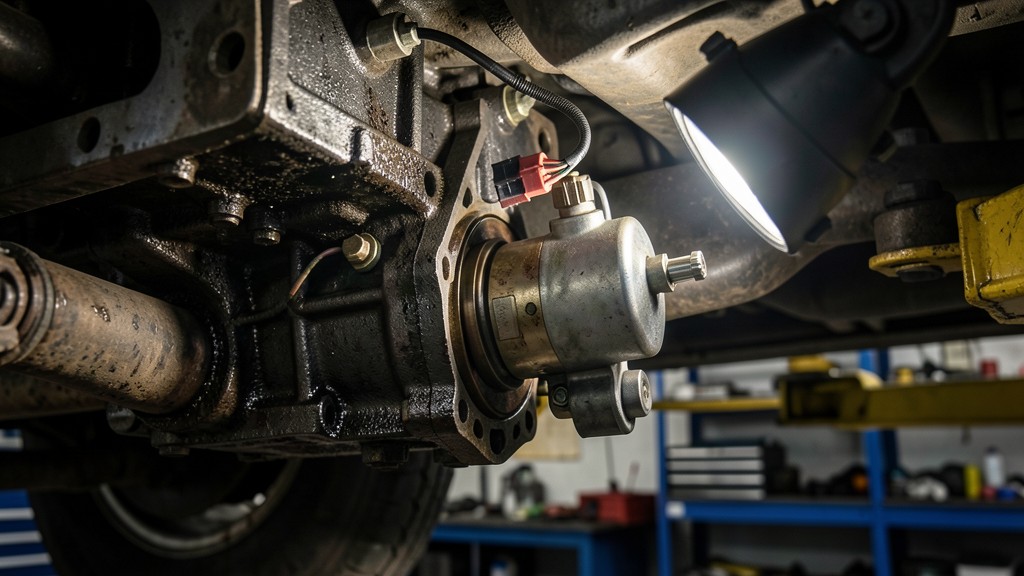
A failed starter motor tells a very different story, and this is where most people misdiagnose the problem:
• A single, solid CLICK — then nothing. Unlike the battery’s rapid machine-gun clicking, a dead starter usually gives you one loud clunk and silence. The dash lights stay bright. The radio works. Everything electrical seems fine — the engine just refuses to turn over.
• Lights stay bright while cranking. This is the giveaway. If your dash and headlights stay at full brightness when you try to start, the battery is healthy — it’s the starter that isn’t doing its job.
• A grinding or whirring noise. If the starter’s gear isn’t engaging properly with the engine’s flywheel, you’ll hear a metallic grinding or a free-spinning whirr. Don’t keep trying — grinding can chew up the flywheel and turn an $800 repair into a $2,500 one.
• It starts… sometimes. Starter motors often fail intermittently at first. Fine in the morning, dead at the shops, fine again at home. That on-again-off-again behaviour is the starter’s warning shot. Get it checked before it strands you somewhere less convenient than your driveway.
The critical difference to remember: a jump start will not fix a dead starter motor. If you hook up jumper leads, get full power, and the engine still won’t crank — the starter is your problem.
If It’s the Alternator: The Car That Dies While You’re Driving
The alternator is the sneakiest of the three, because its failure often starts with a successful start. Here’s the pattern:
• The battery warning light glows on the dash. That little red battery symbol is badly named — it actually means your charging system has a problem, and nine times out of ten that’s the alternator. If it lights up while you’re driving, the alternator has stopped charging and the car is running on borrowed battery time.
• The car starts, then dies shortly after. With a failed alternator, a freshly charged or jump-started battery will run the car — for a while. As the battery drains, lights dim, the radio cuts out, electric power steering gets heavy, and eventually the engine stalls. Usually at the worst possible moment, like the Princes Freeway exit at peak hour.
• Dim or flickering headlights while driving. If your headlights pulse, dim at idle and brighten as you rev, the alternator is struggling to keep up.
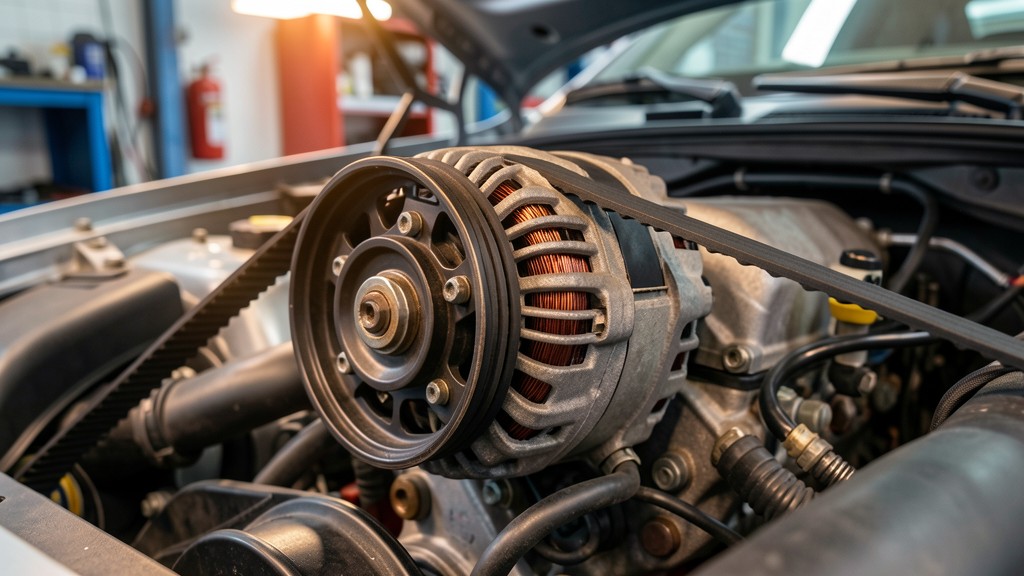
• A whining or growling noise from the engine bay. Worn alternator bearings produce a distinctive whine that rises and falls with engine speed. Smell something like burning rubber or hot electrics? That can be an alternator on its way out, too.
• You’ve replaced the battery… and it went flat again. This is the classic misdiagnosis. A new battery gets fitted, the car runs for a few days, then it’s flat again. Why? The alternator was never charging it. The battery was innocent all along.
The 2-Minute Driveway Test
Next time your car won’t start, run through this quick sequence before you touch anything:
1. Turn the key to “on” and look at the dash. Lights bright? Battery’s probably fine. Lights dim or dead? Battery is suspect number one.
2. Try to start it and listen. Rapid clicking = battery. One loud click with bright lights = starter motor. Slow, lazy cranking = battery on its last legs.
3. Try the headlights. Turn them on. Strong and white? Not the battery. Weak and yellow-orange? Battery.
4. If you jump start it, watch what happens next. Starts and keeps running? The battery was flat — now find out why. Starts but dies again within minutes or days? That’s your alternator. Won’t crank even with a jump? Starter motor.
That four-step check will get you to the right neighbourhood almost every time. Getting to the exact house — battery, terminals, cables, starter solenoid, alternator or drive belt — takes proper test equipment, which is where we come in.
Why Winter Murders Starting Systems in Wyndham
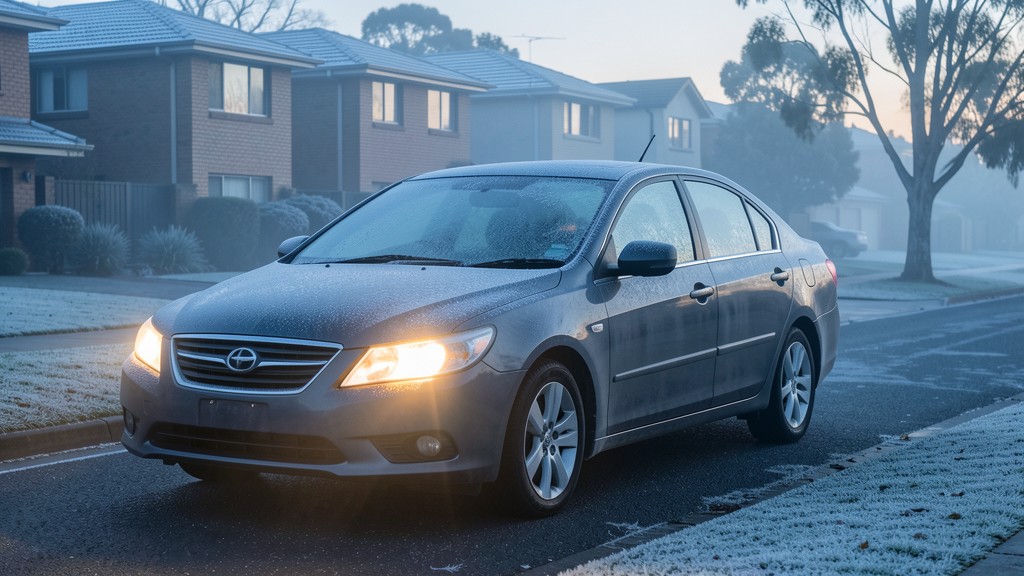
There’s a reason our phones ring off the hook on the first properly cold morning every July:
Cold slows chemistry. At 0°C, a battery loses roughly a third of its cranking power — while a cold engine with thickened oil needs significantly more power to turn over. It’s a double hit, and marginal batteries simply can’t cope.
Short trips starve the battery. The school run, a quick trip to Pacific Werribee, ducking down Sayers Road to the shops — these five-to-ten-minute drives never give the alternator enough time to replace the energy used in starting. Do that every day through winter and the battery slowly drains itself into an early grave.
Winter loads pile on. Heater, demister, heated seats, headlights on for the dark commute home — your alternator works harder in July than any other month. One that’s already worn will pick winter to give up.
What It Costs to Fix — and What It Costs to Wait
Here’s an honest breakdown of what we typically see:
| Repair | Typical Cost | If You Ignore It |
|—|—|—|
| Battery test & terminal clean | $0 – $50 | Corrosion spreads, false “dead battery” diagnoses |
| New battery (fitted) | $150 – $350 | Guaranteed stranding, usually at the worst time |
| Starter motor replacement | $400 – $900 | Complete no-start, plus possible flywheel damage |
| Alternator replacement | $550 – $1,100 | Dead battery, roadside stall, tow truck fees |
| Tow + emergency callout | $150 – $400 extra | The tax you pay for waiting |
Every one of these components is dramatically cheaper to fix on your schedule — in our workshop — than on the side of Derrimut Road in the rain.
Don’t Wait for the Cold Morning That Gets You
Here’s the simplest insurance policy in motoring: a starting and charging system test takes about 15 minutes. We load-test the battery, check the starter’s current draw, and measure the alternator’s output under load. It tells us exactly how healthy each component is — and whether any of them are living on borrowed time.
If your car has been cranking a little slower lately, if the battery is more than three years old, or if you’ve just had a “it did something weird but then started fine” moment — that was your warning. The next one comes with a tow truck.
At MO3GMechanics, we test before we sell you anything. If your battery just needs a clean and a charge, that’s what we’ll tell you. No pressure, no parts you don’t need.
📞 Call us or book online to arrange your winter starting system check at MO3GMechanics, Hoppers Crossing — before the next cold snap does the testing for you.