
# The Hoppers Crossing Tyre Guide: Rotation, Alignment & When to Replace
**Slug:** tyre-care-rotation-wheel-alignment
**Category:** Brakes, Suspension & Steering
—
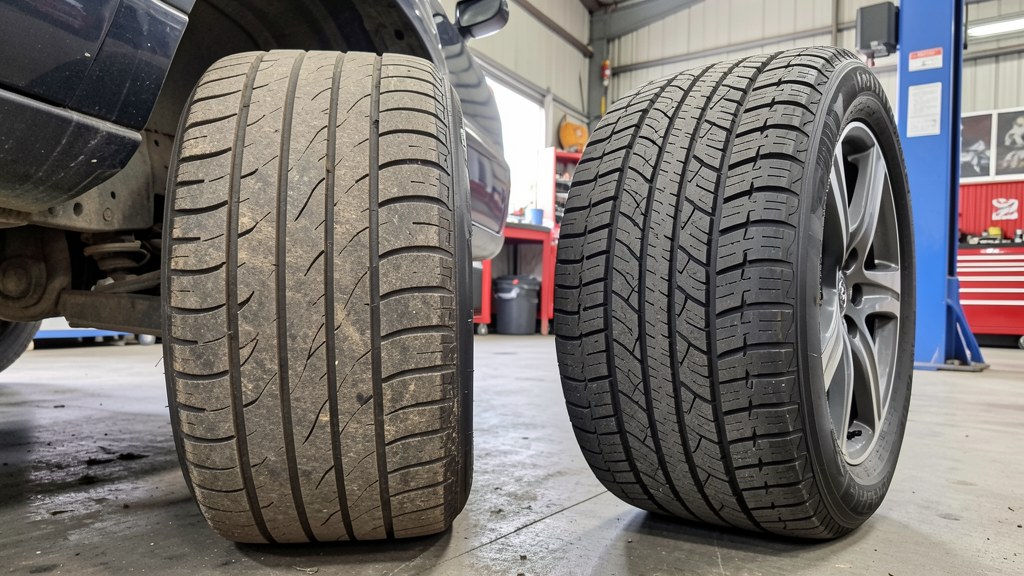
Wyndham’s Roads Are Eating Your Tyres
If you live in Hoppers Crossing and you’ve noticed your tyres wearing out faster than your mates’ in other parts of Melbourne, you’re not imagining it. Between the stop-start chaos along Sayers Road, the roundabout-heavy stretches near Derrimut Road, and the constant flow on the Princes Freeway, your tyres are working harder than most. Throw in the scorching summer bitumen that bakes Hoppers Crossing into a 40-degree oven every January, and you’ve got a recipe for accelerated rubber degradation.
At MO3GMechanics, we see it every week. A customer rolls in after doing 20,000 kilometres in two years and their front tyres are bald on the inner edge while the rears still look brand new. Or worse — they’ve been running 10 psi under pressure for months and the outer shoulders are shredded. Tyres aren’t cheap. A decent set of four will set you back anywhere from $600 to $1,200 depending on your vehicle, and neglecting basic maintenance can shave 30 to 50 percent off their lifespan. That’s real money left on the table.
This guide walks you through everything you need to know about tyre care, rotation, and wheel alignment — specifically tailored to driving conditions here in Wyndham. Let’s get into it.
The 10-Cent Tyre Tread Test
In Australia, the legal minimum tread depth is 1.5 millimetres. Drop below that and you’re not just risking a defect notice — you’re gambling with your life and the lives of everyone sharing the road with you. The thing is, 1.5mm is shockingly shallow. It’s roughly the width of the letters on a 10-cent coin. That’s the test: take a 10-cent piece, insert it into the tread groove, and if you can see the coin’s lettering above the rubber, your tyre is done.
But here’s what most drivers don’t realise: 1.5mm is the absolute floor, not a target. At that depth, your tyre’s ability to disperse water is severely compromised. In wet conditions — which we get plenty of across Wyndham in autumn and winter — a tyre at 1.5mm takes roughly 40 percent longer to stop from 80 km/h than a tyre with 5mm of tread. That’s the difference between stopping safely at the lights near Hoppers Crossing Shopping Centre and sailing into the back of a Corolla.
Most new tyres come with 8 to 9 millimetres of tread. We recommend starting to think about replacement at 3mm. By 2mm, you should be booking in. Here’s a quick reference:
- 8–9mm: New tyre. Full grip, full water dispersion.
- 5–6mm: Healthy. Still performing well.
- 3mm: Warning zone. Start planning replacement.
- 1.5mm: Legal minimum. Replace immediately.
- Below 1.5mm: Illegal. Defect-notice territory and a crash risk.
Also check for uneven wear across the tyre face. If the inside edge is bald but the outside has plenty of tread, you’ve got an alignment or suspension problem — which we’ll get to shortly.
Why Tyre Rotation Matters (And How Often to Do It)
Tyres don’t wear evenly. It’s that simple. On a front-wheel-drive car — which is most of what’s on the road in Hoppers Crossing — the front tyres handle steering, braking, acceleration, and the lion’s share of the vehicle’s weight over the front axle. They work dramatically harder than the rears, which essentially just follow along. On a rear-wheel-drive ute or performance car, the rears take the acceleration punishment instead, but the fronts still cop the braking and steering loads.
The solution is rotation: swapping the tyres from front to rear (and sometimes side to side) so that each tyre spends time in every position, wearing more uniformly. The general rule is every 10,000 kilometres or every six months, whichever comes first. For most Hoppers Crossing drivers doing the daily commute to Melbourne or running the kids to school across Wyndham, that’s roughly every second or third service.
Here’s what proper rotation achieves:
- Even wear across all four tyres — so you replace them as a set rather than two at a time
- Extended tyre life by 20 to 30 percent — meaning a $800 set behaves like a $1,040 set in terms of total kilometres
- Consistent grip — especially important in the wet
- Early problem detection — rotating gives us a chance to spot alignment issues, suspension wear, or slow leaks before they become dangerous
How Rotation Patterns Work
It’s not as simple as just swapping front to back. The correct pattern depends on your vehicle’s drivetrain and whether your tyres are directional:
- Front-wheel drive (FWD): Cross the fronts straight back and the rears crossed to the front. This balances the heavier front wear.
- Rear-wheel drive (RWD) or 4WD: Reverse the pattern — rears come straight to the front, fronts cross to the rear.
- All-wheel drive (AWD): A modified cross pattern, sometimes called the X-pattern, where all four tyres move diagonally.
- Directional tyres: These can only be swapped front to rear on the same side. They can’t be crossed because the tread pattern only works in one rotational direction.
At MO3GMechanics, we figure out the right pattern for your specific vehicle and tyre type. We also check tyre pressures, inspect for damage, and torque the wheel nuts to manufacturer spec using a calibrated torque wrench — not a rattle gun wound up to “she’ll be right.”
Wheel Alignment: The Silent Tyre Killer

Wheel alignment is the adjustment of three key angles — camber, caster, and toe — so your wheels are pointing exactly where they should be relative to each other and the road. When these angles drift out of spec, your tyres wear unevenly, your fuel economy suffers, and your car can feel nervous or unpredictable at speed.
Here in Hoppers Crossing, alignment issues are incredibly common. One decent hit on a pothole along Derrimut Road, a nudge against a kerb at Pacific Werribee, or even the slow degradation of suspension bushes over time is enough to knock things out. And you won’t always feel it — minor misalignment can silently chew through a set of tyres without you noticing until it’s too late.
Signs Your Wheel Alignment Is Out
Watch for these symptoms:
- Steering wheel off-centre — if you’re driving straight down Sayers Road but your steering wheel is cocked at an angle, something’s off.
- Pulling to one side — on a flat, straight road, the car should track true. If it drifts left or right, get it checked.
- Uneven tyre wear — balding on the inside or outside edge while the centre is fine is a textbook camber problem. Feathering across the tread blocks points to a toe issue.
- Vibration through the steering wheel — though this can also be a wheel balance or tyre problem, it’s worth investigating.
- Loose or wandering steering — the car feels vague and doesn’t self-centre properly after turning.
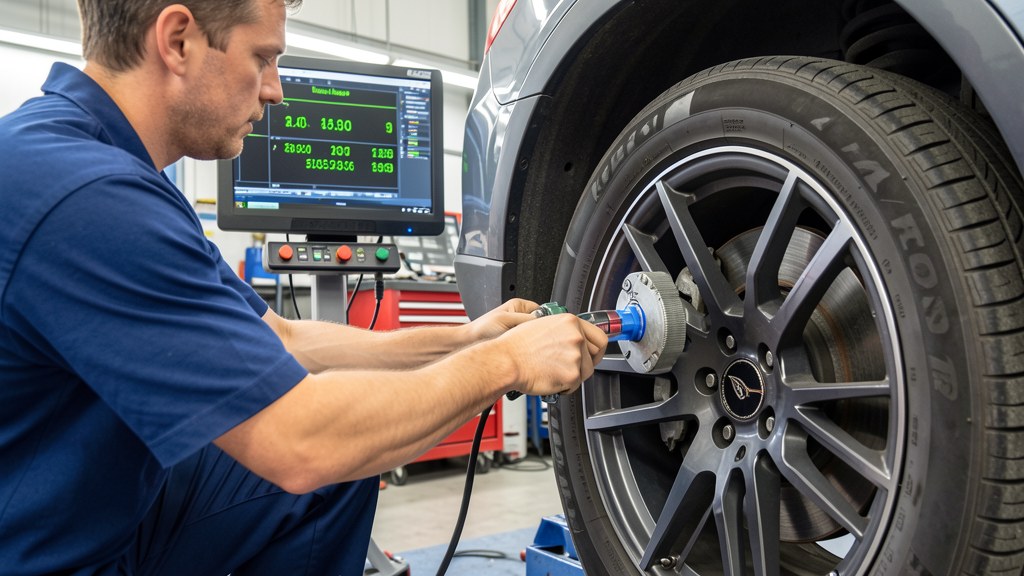
A proper wheel alignment at MO3GMechanics involves putting your car on a precision alignment machine that measures all four wheels simultaneously — not just the fronts, as some cut-rate places do. We adjust camber (the vertical tilt of the wheel), caster (the fore-aft angle of the steering axis), and toe (whether the wheels point in or out when viewed from above) to the manufacturer’s exact specifications. A full four-wheel alignment takes about an hour and typically costs between $120 and $180, depending on the vehicle and whether adjustments are needed on all four corners.
Tyre Pressure: The Basics Most Drivers Get Wrong
If there’s one thing that destroys tyres faster than anything else — faster than potholes, faster than alignment issues, faster than Wyndham’s summer heat — it’s incorrect tyre pressure. And the alarming reality is that somewhere around 60 percent of vehicles on the road are running pressures that are either too high or, more commonly, too low.
Under-inflated tyres flex more as they roll, generating excess heat and causing the shoulders to wear rapidly. Over-inflation, on the other hand, causes the centre of the tread to bulge and wear prematurely, while also reducing the contact patch and degrading grip. Neither is good.
So where do you find the correct pressure? Not on the tyre sidewall — that’s the maximum pressure the tyre can hold, not the recommended pressure for your vehicle. The correct figure is on the tyre placard, which is usually located in one of these spots:
- Inside the driver’s door jamb
- Inside the fuel filler flap
- In the glovebox
- Under the bonnet near the strut tower
The placard will list pressures for normal loads and sometimes for fully loaded or high-speed conditions. For most passenger vehicles in Hoppers Crossing, you’re looking at something in the range of 32 to 36 psi.
How often should you check? Once a month, minimum. Tyres naturally lose about 1 psi per month through the rubber itself, and temperature changes affect pressure too — a 10-degree drop in ambient temperature can reduce pressure by 1 to 2 psi. So when we hit winter and those cold Hoppers Crossing mornings, your pressures drop even if you haven’t lost any air. Check them cold, before driving, using a quality pressure gauge — not the ones at the servo that have been dropped on the concrete a thousand times.
The Cost of Neglect vs. The Cost of Maintenance
Let’s talk dollars, because that’s what makes this real for most people.
Say you buy a set of four quality tyres for $800. With proper rotation, correct pressures, and regular alignment checks, you might get 60,000 to 80,000 kilometres out of them. That works out to roughly 1 to 1.3 cents per kilometre in tyre costs. Reasonable.
Neglect all of that and you might only get 35,000 kilometres — and you’ll likely have to replace the fronts well before the rears, meaning you’re buying two tyres at $400 a pop instead of spreading the cost across four. Now you’re at 2.3 cents per kilometre, and you’ve potentially chewed through an extra set over the vehicle’s life. That’s $800 gone that didn’t need to be.
Then there’s the fuel economy penalty. Under-inflated tyres and poor alignment increase rolling resistance, which means your engine works harder and burns more fuel. The difference can be 3 to 5 percent — which over a year of Hoppers Crossing to Melbourne commuting might cost you an extra $150 to $250 in petrol.
And then there’s the cost you can’t put a number on: safety. A blowout on the Princes Freeway at 100 km/h because your under-inflated tyre overheated. A wet-weather skid because your bald rears couldn’t disperse water. A pedestrian you couldn’t stop for in time because your worn fronts had no grip. Tyre maintenance isn’t just about saving money — it’s about making sure you and your family get home safely.
Here’s what we recommend as a baseline maintenance schedule:
- Every month: Check tyre pressures (cold).
- Every 10,000 km or 6 months: Tyre rotation and pressure check.
- Every 10,000 to 15,000 km: Wheel alignment check (or immediately after hitting a kerb or pothole).
- Every 5 years: Tyre age inspection, regardless of tread depth. Rubber degrades over time.
- Every 10 years: Full tyre replacement, even if they look fine. Old rubber is dangerous rubber.
Book a Tyre Check and Rotation at MO3GMechanics
Your tyres are the only thing connecting your car to the road. Four contact patches, each about the size of a postcard, are all that stand between you and whatever happens next. Looking after them isn’t optional — it’s the smartest, cheapest safety investment you can make.
At MO3GMechanics, we’ve been keeping Hoppers Crossing drivers safe and saving them money on tyres for years. Our workshop on the Princes Freeway corridor is fully equipped with precision alignment technology, calibrated torque equipment, and the expertise to spot wear patterns and alignment issues that other places miss. We’ll check your tread depth, inspect your pressures, rotate your tyres to the correct pattern for your vehicle, and give you an honest assessment of whether you need an alignment, a replacement, or just a pat on the back for doing things right.
A tyre rotation and check starts at just $49. A full four-wheel alignment is $120 to $180. It’s a small investment that can extend your tyre life by thousands of kilometres and, more importantly, keep you safe on the roads we all share across Wyndham.
Don’t wait until your next blowout or bald-tyre scare. Book your tyre check and rotation at MO3GMechanics today. Give us a call, message us online, or drop by the workshop — we’ll get you sorted, back on the road, and confident that every kilometre you drive is a safe one.