
There’s a rattling under your car that wasn’t there last week. It gets louder on the stretch of Princes Freeway between Hoppers Crossing and Werribee, and you’ve started turning the radio up to drown it out. Sound familiar?
Your exhaust system is one of those components that most drivers completely ignore — until it’s falling off, making a racket, or failing an emissions test. But here’s the thing: your exhaust does far more than just keep your car quiet. It’s a critical safety system, an emissions control system, and a fuel efficiency system all rolled into one.
At MO3GMechanics, we see exhaust issues almost daily from drivers across Hoppers Crossing, Tarneit, and the wider Wyndham area. Victorian roads, winter salt spray, and good old-fashioned wear and tear take their toll. Here’s everything you need to know about keeping your exhaust system — and your catalytic converter — in top shape.
What Your Exhaust System Actually Does
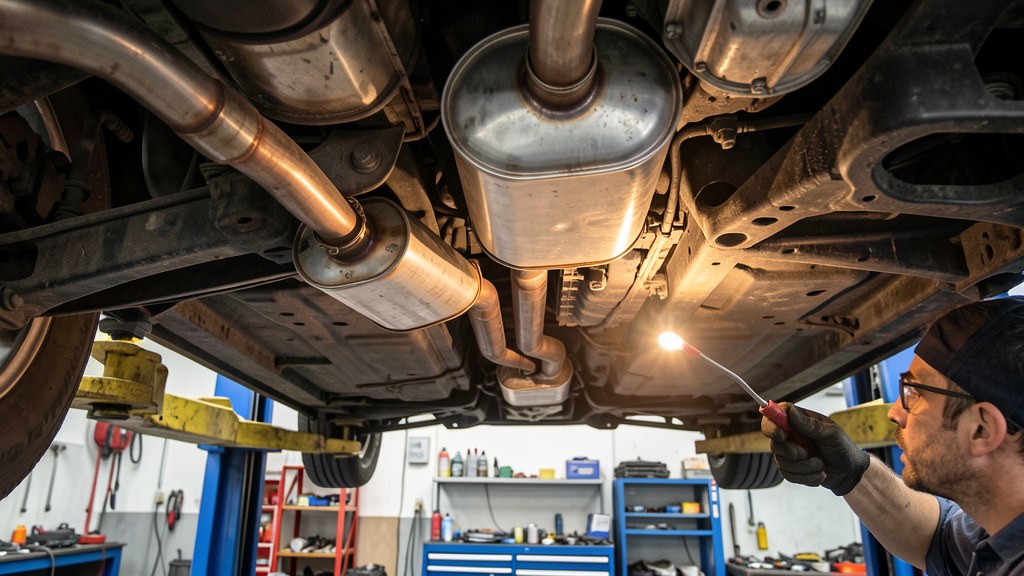
Most people think the exhaust is just a pipe that funnels fumes out the back. In reality, it’s a carefully engineered system with four main jobs:
1. Directs Toxic Gases Away from the Cabin: Carbon monoxide, nitrogen oxides, and unburnt hydrocarbons are all byproducts of combustion. A leak anywhere along the system — especially near the engine bay — can allow these gases to enter the cabin. This isn’t just inconvenient. It’s potentially lethal.
2. Reduces Noise: Your engine produces thousands of controlled explosions per minute. The muffler and resonator use a series of chambers and baffles to absorb and redirect sound waves. A hole the size of a 5-cent piece can turn a quiet sedan into something that sounds like a V8 race car.
3. Controls Emissions: The catalytic converter converts harmful gases — carbon monoxide, nitrogen oxides, and unburnt hydrocarbons — into less harmful ones like carbon dioxide, nitrogen, and water vapour. In Victoria, your car must meet EPA emissions standards. A failing catalytic converter means your car won’t pass.
4. Optimises Fuel Efficiency: A properly functioning exhaust maintains the correct backpressure for your engine. When there’s a leak or blockage, your engine has to work harder, burning more fuel. A damaged exhaust can increase fuel consumption by 5% to 15%.
The Catalytic Converter: The Most Valuable Component Under Your Car
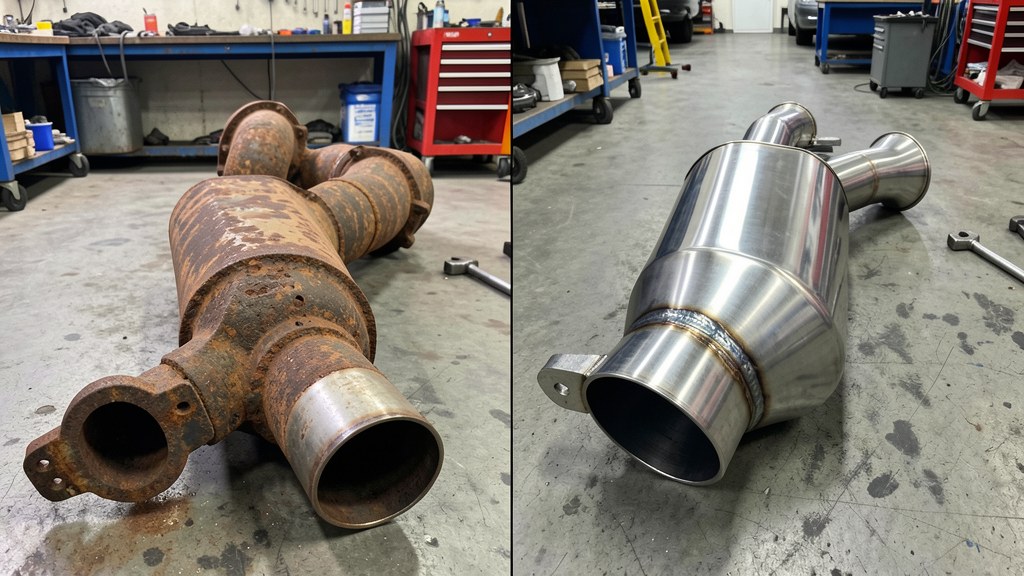
Your catalytic converter (or “cat”) is a metal canister installed in the exhaust line between the engine and the muffler. Inside is a ceramic honeycomb structure coated with precious metals — platinum, palladium, and rhodium. These metals act as catalysts, triggering chemical reactions that convert toxic gases into less harmful ones.
Here’s why you should care: those precious metals make catalytic converters a target for theft. A single converter can contain $200 to $600 worth of recyclable precious metals, and thieves can remove one from a parked car in under two minutes with a battery-powered angle grinder. SUVs and 4WDs are particularly popular targets because they sit higher off the ground, giving thieves easy access.
If your catalytic converter is stolen, you’ll know immediately. Your car will go from quiet to deafeningly loud the moment you start it. Replacement cost? Anywhere from $800 to $2,500 depending on your vehicle.
How to Protect Your Catalytic Converter
• Park in well-lit areas or a garage where possible
• Ask your mechanic about installing a catalytic converter shield or cage
• Etch your numberplate or VIN onto the converter casing — this makes it harder for thieves to on-sell
• Be alert: if your car suddenly sounds like a tractor, don’t drive it — call us
5 Warning Signs of Exhaust Problems
Exhaust issues don’t appear overnight. They develop slowly, and your car will tell you something’s wrong — if you’re paying attention. Here are the five signs we see most often at our Hoppers Crossing workshop:
1. A Loud Rumbling or Roaring Noise
This is the most obvious sign. A hole or crack in the muffler, resonator, or any pipe along the system will dramatically increase exhaust noise. If your car suddenly sounds like it belongs at Sandown Raceway, you’ve got a leak.
2. Rattling Under the Car
Heat shields, brackets, and hangers can corrode and come loose. A rattling sound — especially when idling or going over bumps on local roads like Sayers Road or Derrimut Road — often points to a loose heat shield or broken exhaust hanger. It might seem minor, but a loose exhaust can drop and scrape the road, causing serious damage.
3. The Smell of Exhaust Fumes
If you can smell exhaust inside the cabin — or even strongly outside the car — you likely have a leak. Carbon monoxide is odourless, but other exhaust gases carry a distinct smell. If you smell exhaust inside the cabin, stop driving immediately and have the car towed. This is a serious safety hazard.
4. Reduced Fuel Economy
Noticed you’re filling up more often? An exhaust leak or failing oxygen sensor (which sits in the exhaust system) can cause your engine to run rich — burning more fuel than necessary. If your kilometres per tank have dropped noticeably, the exhaust system should be on your inspection list.
5. Visible Smoke or Soot

Black soot around exhaust joints, a dripping residue from the tailpipe, or visible smoke from underneath the car all indicate problems. Blue smoke means oil is burning. White smoke could be coolant. Black smoke suggests the engine is running rich. All of them warrant a professional inspection.
Why Victorian Conditions Are Tough on Exhaust Systems
Victoria’s climate is harder on exhaust systems than most people realise. Here’s why:
Winter moisture: Cold starts produce condensation inside the exhaust system. Over time, this moisture reacts with the gases to form corrosive acids that eat away at the metal from the inside out. Short trips — the kind most Hoppers Crossing drivers do for school runs or quick trips to the shops — mean the exhaust never gets hot enough to evaporate this moisture fully.
Road grime and debris: Road debris, dirt, and moisture kicked up from wet roads accelerate external corrosion. If you regularly drive on unsealed roads or through construction zones around the Wyndham growth corridors, your exhaust is taking a beating.
Age and kilometres: Most exhaust systems last between 5 to 8 years or 80,000 to 100,000 kilometres under normal conditions. If your car is older or has high kilometres, the exhaust should be inspected at every service.
Exhaust Modifications and the Law in Victoria
We get asked about exhaust modifications all the time. Can you put a louder exhaust on your car? Can you remove the catalytic converter for better performance?
Here’s the short answer: modifying your exhaust in ways that increase noise beyond legal limits or remove emissions equipment is illegal in Victoria.
The EPA Victoria sets strict noise limits — generally 90 decibels for passenger vehicles. Removing or bypassing a catalytic converter is an offence that can result in fines of up to $5,000 for an individual. If you’re selling a car without a functioning catalytic converter, you’re also committing an offence.
If you want to upgrade your exhaust for genuine performance gains, talk to us. There are legal options that improve flow and efficiency without landing you on the wrong side of the EPA.
Cost of Repair vs Cost of Neglect
Let’s break down the numbers:
| Repair | Typical Cost | If Ignored |
|—|—|—|
| Exhaust gasket replacement | $150 – $300 | Leaks worsen, fumes enter cabin |
| Muffler replacement | $300 – $700 | Noise, failed roadworthy, fines |
| Exhaust pipe section | $200 – $500 | Can cause complete system failure |
| Catalytic converter | $800 – $2,500 | Failed emissions, illegal to drive |
| Oxygen sensor | $250 – $500 | Increased fuel consumption, engine damage |
| Full exhaust system | $1,500 – $3,500 | All of the above |
The math is simple: catching an exhaust issue early when it’s a $200 gasket repair is always going to be cheaper than waiting until you need a full system replacement.
Don’t Wait Until It’s Loud — Get It Checked
Your exhaust system works silently and reliably for years — until it doesn’t. The best approach is to have it inspected at every service, especially if your car is over five years old or you do a lot of short trips around Hoppers Crossing.
At MO3GMechanics, we offer comprehensive exhaust inspections as part of our standard service. We’ll check for leaks, corrosion, loose brackets, catalytic converter condition, and oxygen sensor function. If something needs attention, we’ll show you exactly what’s wrong and explain your options — no pressure, no surprises.
Whether you’ve noticed a rattle, a smell, or just want peace of mind, book your car in today. Don’t wait until a small exhaust leak becomes a big — and expensive — problem.
📞 Call us or book online to arrange your exhaust inspection at MO3GMechanics, Hoppers Crossing.