

If you’ve driven around Hoppers Crossing, Tarneit, or Werribee lately, you’ve probably noticed just how many modern diesel SUVs and dual-cab utes are on our roads. From Toyota Hiluxes and Ford Rangers to Prado and Santa Fe family haulers, modern diesels are incredibly popular. They offer great towing power, solid fuel economy, and feel built to last.
But there’s a quiet problem brewing under the bonnets of many local family cars.
If your daily driving consists almost entirely of the morning school drop-off, short trips to Pacific Werribee, or running down to the local train station, your modern diesel vehicle is slowly clogging its own throat.
At MO3GMechanics, we are seeing a major rise in vehicles coming in with the dreaded DPF warning light glowing on the dashboard—often accompanied by a sudden loss of power.
Here is why short suburban trips are a slow death sentence for modern diesels, how your exhaust filter actually works, and how to avoid a massive repair bill.
What on Earth is a DPF?
To understand the problem, we need to talk about the Diesel Particulate Filter (DPF).
Since about 2009, almost all diesel vehicles sold in Australia have been fitted with a DPF. It’s a specialized filter built into your exhaust system designed to capture black soot and carbon particles before they escape out of your tailpipe.
Its job is to protect the environment and keep our air clean. And it is highly effective at doing so.
But unlike a standard air or oil filter that you simply throw away when it’s full, a DPF is designed to clean itself. This self-cleaning cycle is a process called regeneration.
The Science: It’s a Self-Cleaning Oven That Needs Heat
Think of your DPF like a self-cleaning oven. To burn away the grease and grime, a self-cleaning oven has to get incredibly hot.
Your DPF is exactly the same. To burn the trapped soot and convert it into harmless ash, the filter needs to reach temperatures of over 500°C to 600°C.
For your car to automatically trigger this high-heat cleaning cycle, two things need to happen:
- The engine must reach full operating temperature.
- The car must be driven at a sustained speed (usually 80 km/h or more) for at least 20 to 30 minutes.
In a perfect world, you’d drive your diesel ute down the Princes Freeway or take a weekend trip out of Melbourne, and your car would quietly clean its filter in the background without you ever knowing.
But local suburban driving is far from perfect.
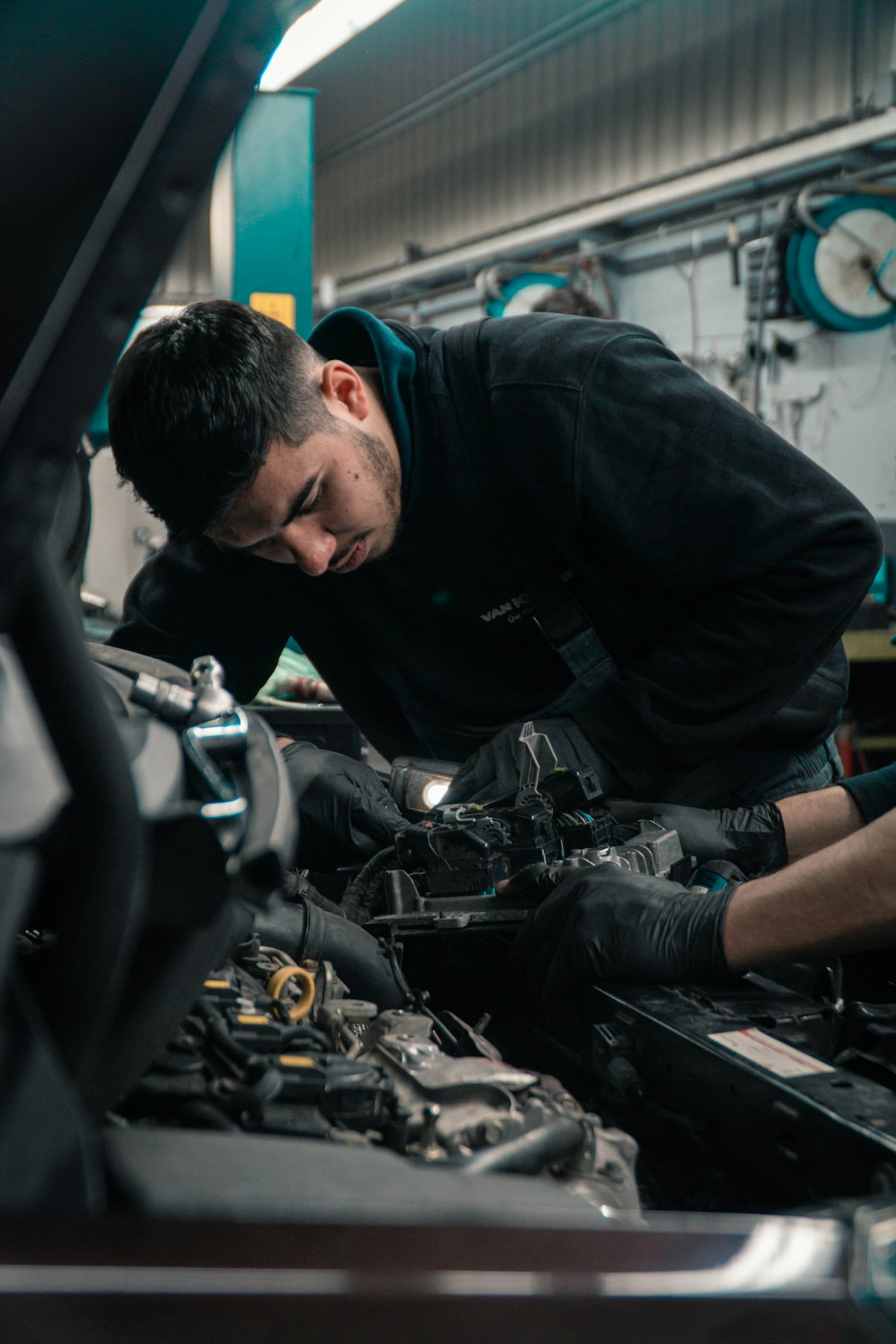
Why the School Run is a DPF’s Worst Nightmare
When you only use your diesel SUV for 5-minute school runs in Tarneit or quick grocery trips in Werribee, the exhaust never gets hot enough to trigger a self-cleaning cycle.
Instead, the cold, stop-and-go driving causes the engine to burn fuel less efficiently, producing more heavy soot than usual. This soot builds up rapidly inside the cold filter.
Because the car never gets a sustained freeway run, it tries to start a regeneration cycle but has to abort it when you park and turn off the engine.
Eventually, the filter becomes so choked with soot that the engine can’t breathe.
When this happens:
- The DPF warning light triggers on your dashboard.
- The car may enter “Limp Mode”—a safety setting that severely limits engine power to protect itself, making it sluggish and barely able to accelerate.
- The worst-case scenario: A completely blocked DPF that is choked beyond recovery. Replacing a ruined DPF can easily cost between $2,000 and $8,000 depending on your vehicle make and model.
How to Prevent DPF Clogging (The “Weekly Italian Car Wash”)
If you own a modern diesel, you don’t have to sell it and buy a petrol car. You just have to change one simple driving habit.
- The Weekly Highway Run: Once a week, or at least every fortnight, take your car out for a proper drive. Get it onto the Princes Freeway or the Western Ring Road, get the speed up to 100 km/h, and keep it there for a solid 25 to 30 minutes. This gives your car the exact time and temperature it needs to run a full DPF regeneration and blow out the soot.
- Don’t Ignore the Warning Light: If your DPF light comes on, do not ignore it. It is your car’s way of saying: “I am full, please take me for a highway drive.” If you take it for a run immediately, the light will usually turn off as the soot burns away.
- Use the Right Engine Oil: Modern diesels require very specific “low-SAPS” engine oils designed to produce less ash when burned. Using cheap, incorrect oil will clog your DPF permanently with ash that cannot be burned away.
Got a DPF Light? Don’t Wait for Limp Mode
If your DPF light has been on for a while, or if your car has already entered limp mode, a highway drive won’t save it. At this stage, the filter is too blocked for the car to clean itself safely, and attempting to force it on the highway can actually create a fire hazard.
At MO3GMechanics, our qualified mechanics have specialized diagnostic equipment to check your DPF’s soot loading levels.
We can perform a Forced DPF Regeneration in our workshop, safely heating up the exhaust system under controlled conditions to clear the blockage. If the filter is heavily choked, we also offer professional DPF cleaning and carbon-cleaning services to restore your engine’s breathing without the eye-watering cost of a replacement filter.
📞 Call MO3GMechanics today or fill out our contact form below to book a professional diagnostic scan and keep your diesel running clean!